
"African coffee decline"
600 article(s) found

Tanzania Arusha Coffee Farm Tanzania Coffee producing Tanzania Coffee Bean Flavor
Tanzanian coffee market: Tanzania's coffee exports occupy an important position in the overall national economy. In the past, Tanzania's coffee industry has been dominated by plantation cultivation, but now more than 85% is cultivated by smallholders. Many small farmers form cooperative organizations, the most important of which is the Kilimanjaro Coopera

Introduction to the flavor and taste characteristics of Ethiopian coffee manor with soft acidity
There are mainly mountain plateaus in Ethiopia, and the central and western regions are the main part of the plateau, accounting for 2% of the whole territory. The East African Rift Valley runs through the whole territory, with an average elevation of nearly 3000 meters, which is known as the roof of Africa. The terrain around the plateau is gradually declining. The Darol depression in the north fell to 113 meters below sea level, the lowest point in the country. A narrow banded plain along the coast of the Red Sea

Harald Coffee Flavor Coffee varieties from African Coffee beans
Harald (Harar) is 1600 meters above sea level, and the Harald Heights in eastern Ethiopia is one of the highest elevation areas for human coffee cultivation (some even claim to be as high as 2000 Murray 2,700 meters). Across the Gulf of Aden, overlooking the two ports of Moka and Aden in Yemen. For centuries, Harald coffee farmers carried coffee beans down the mountain with camels, donkeys or carriages, risking being besieged by hyenas.

Grinding scale of Tanzania Coffee beans with Pure Flavor introduction to Regional treatment Manor
Due to political instability and rampant diseases and insect pests, the coffee industry in Tanzania has been damaged, leading to a decline in the overall level of coffee and instability in quality, which in turn lead to lower prices, which are usually the result of a further decline in the coffee industry. What's more, it is estimated that more than 12% of the Arabica coffee grown in northern Tanzania from 1969 to 1985 has gone.

A brief introduction to the cultivation of boutique coffee beans in Angola, which are almost impossible to buy, geography, climate, altitude.
In the 1970s, Angola produced about 180000 tons of commercial coffee per year. With an area of 161000 hectares and an annual output of 99550 tons, Uige Province is the largest coffee grower.
African coffee flavor beans Harald Coffee Flavor cultivated in eastern Ethiopia
Harald (Harar) is 1600 meters above sea level, and the Harald Heights in eastern Ethiopia is one of the highest elevation areas for human coffee cultivation (some even claim to be as high as 2000 Murray 2,700 meters). Across the Gulf of Aden, overlooking the two ports of Moka and Aden in Yemen. For centuries, Harald coffee farmers carried coffee beans down the mountain with camels, donkeys or carriages, risking being besieged by hyenas.
Angora coffee beans
Angola's Angola, which has been growing coffee for more than 100 years, ranked first in Africa until 1960 and reached 225000 tons in 1979, ranking second in Africa and fourth in the world. The output in 1992 was 5000 tons. Sisal production is second only to coffee, and the level of per unit yield is higher. In 1986, the output reached 20,000 tons, sisal ranked second in Africa both in terms of output and export volume. Luo'an, Xinhuanet

A brief introduction to the cultivation of high-acidity Angolan boutique coffee beans, geographical location, climate and altitude
The origin of coffee in Angola: 98% of the coffee in Angola (Angola) is Roberts coffee. The best brands in Angola used to be Ambriz, Amborm and NovoRedondo, all of which are known for their consistent quality. Angola was once one of the largest coffee producers in the world, with coffee production reaching a record 22.5 in 1974

Introduction of Kenya Jinchugu coffee boutique coffee bean flavor manor with strong taste
Kenya has friendly relations with Uganda. With close economic and trade ties, Ukraine is the largest commodity exporter in Kenya and is willing to be the largest foreign investor in Ukraine. In December 2004, the two countries signed an agreement on direct railway transport. In April 2006, President Kibaki went to Ukraine to attend the inauguration ceremony of President Museveni. In July, President Museveni visited Kenya. In January 2008, Musse, who holds the rotating presidency of the East African Community

African Kenyan boutique coffee beans, boutique coffee Kenyan coffee from Ethiopia
Kenyan coffee is mostly grown at 15002100 meters above sea level and is harvested twice a year. Its main feature is a distinct fruit aroma, the common fruit aroma is citrus. Kenyan coffee has a multi-layered taste and juice acidity, perfect grapefruit and wine flavor, moderate mellow, is the favorite of many people in the coffee industry. Kenyan Coffee borrows Hollywood movies.

A brief introduction to the treatment method of grinding degree and baking degree of fine coffee beans in Angola, once a big coffee country.
According to officials, Angola's coffee production is expected to reach 4000 tons in 2006, an increase of 34 percent over 2005. Coffee production increased by 1000 tons between 2005 and 2006. The major coffee producing provinces are Kwanza Sul, Bengo, Kwanza North and Uige.
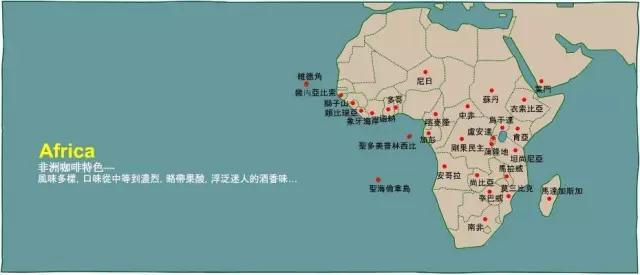
Coffee knowledge | "African Coffee"
The world of coffee is rich and interesting. Coffee from different continents has its own characteristics. Coffee is the product of the equator to 15 degrees north latitude. Therefore, it is produced in South America, Asia and Africa. However, the coffee produced from the equator to 15 degrees north latitude is so strong and bitter that only some people who drink coffee and do not know its taste will like it. In fact, the best coffee should come from

Flavor description of coffee manor in Arusha, Tanzania introduction of fine coffee in taste producing area
Tanzania's main coffee producing area, located at the foot of Mount Kilimanjaro, is rich in volcanic soil. Some coffee trees planted here are more than 100 years old. Coffee was first introduced by Christians from Kenya to grow coffee. Coffee trees must be carefully taken care of, weeded and fertilized. And old branches must be cut off so that new branches can grow to maintain the quality of coffee beans.

African coffee| Sao Tome and Principe| Arabica beans
Professional coffee knowledge exchange More coffee bean information Please pay attention to coffee workshop (Weixin Official Accounts cafe_style) Qianjie boutique coffee recommendation| Polsa Pacama, Guatemala| Yega Shefi Sun-dried Red Cherry| Costa Rican Shumava Black Honey| Costa Rica Angel Estate Sao Tome and Principe is located in the Gulf of Guinea in Africa. Sao Tome Island is 255 km from the West Bank of Africa.

Angola, once one of the largest coffee countries in the world.
Josefa, Secretary General of the Coffee Organization of African countries? Correa? Sako said on the 10th that Angola is expected to regain its position as a major coffee producer in the world due to the nationwide coffee planting campaign. In analyzing the global financial crisis and the situation in the international coffee market, Sako said that there are still gaps in the international coffee market, and Angolan coffee should not only increase its output, but also improve its quality.

Flavor description of Coffee beans with the characteristics of the Lion King in Sidamo A brief introduction to the varieties of taste treatment
Sidamo Lion King characteristic flavor description of coffee beans taste treatment varieties introduce sun-cured coffee accounts for 65% of exports. Mainly picked by families, red coffee beans are placed on cement floors or on high tables to dry to about 11.5% humidity, then peeled and cleaned. Before the decline, coffee exports accounted for more than half of Ethiopia's foreign exchange earnings, but now they account for only about 35%.

Popular Kenyan coffee African flavor coffee
Coffee entered Kenya in the 19th century, when Ethiopian coffee drinks were imported into Kenya through southern Yemen. But it was not until the early 20th century that the Bourbon Coffee Tree was created by the St. Austen Mission (St). AustinMission) is introduced. Kenyan coffee is mostly grown at an altitude of 1500 to 2100 meters and is harvested twice a year. To ensure that only ripe berries are picked, people must be in the forest

A brief introduction to the history and culture of the origin and development of Angolan boutique coffee beans that are almost impossible to buy.
Angola was once one of the largest coffee producers in the world, with coffee production reaching a record 225000 tons in 1974. However, as a result of the 27-year civil war that broke out after independence in 1975, Angolan coffee production fell sharply, Angola's ambassador to the United States, Agostinho Tavares, told Angolan daily newspaper Jornal de Angola on Monday in New York that the first batch of Angolan coffee exported to the United States (a total of 11 tons) had arrived in the country.
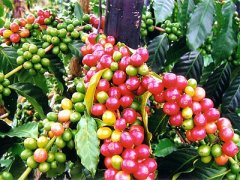
Introduction of boutique coffee beans-- African Kenyan coffee beans Kenyan coffee characteristics Kenyan coffee
African Kenyan coffee Kenyan coffee is mostly grown at an altitude of 15002100 meters and is harvested twice a year. Its main feature is a distinct fruit aroma, the common fruit aroma is citrus. Kenyan coffee has a multi-layered taste and juice acidity, perfect grapefruit and wine flavor, moderate mellow, is the favorite of many people in the coffee industry. Ken
Chinese coffee machinery enters Africa to grow coffee beans.
Abstract: the development of African coffee market provides a new platform for China's food machinery industry. Pang Lu, Chinese Economic and Commercial Counsellor in the Republic of C ô te d'Ivoire, believes that this is a rare opportunity for China's food machinery export. Among the products called black gold by Africans, in addition to oil, there is also coffee. Coffee is the main cash crop in Angola, the primary export of Burundi and the former one.